From silence to sound
Australian scientists developed the world-leading bionic ear, opening up a world of sound for millions.
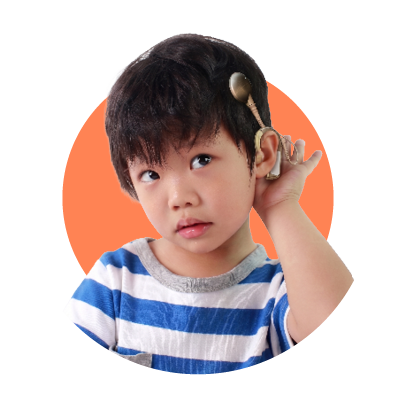
For people with severe to profound hearing loss, a life-changing Australian invention has transformed how they experience the world.
The research
People with profound hearing loss don’t just lose sound. They lose access to conversation, connection, and much of daily life. While hearing aids can amplify sound for those ‘hard of hearing’, they cannot help people who cannot hear at all.
Watching his father struggle with hearing loss, Professor Graeme Clark resolved to become a doctor and ‘fix ears’ at just 10 years old.
His lifelong ambition began to take shape in 1967, when he started investigating whether hearing could be restored using an electronic implantable device.
Most hearing loss is caused by damage to the inner ear, or cochlea – specifically, tiny sensory hairs that transform sound vibrations into electrical signals that the brain can process. Could these thousands of receptors be replaced by artificial electrodes?
Clark assembled a team of scientists, clinicians and engineers to find out. Overseas research had pursued single-electrode designs, but these were insufficient for capturing the complexities of speech.
Instead, Clark pursued a multi-channel approach that could distinguish different pitches and patterns, allowing it to encode the full complexity of speech. He was inspired by speech studies he undertook in the UK, and by a shell on the beach with the same spiral shape as the cochlea. He realised that a piece of grass, rigid at the base and flexible at the tip, could wind through the spiral just as an electrode would need to.
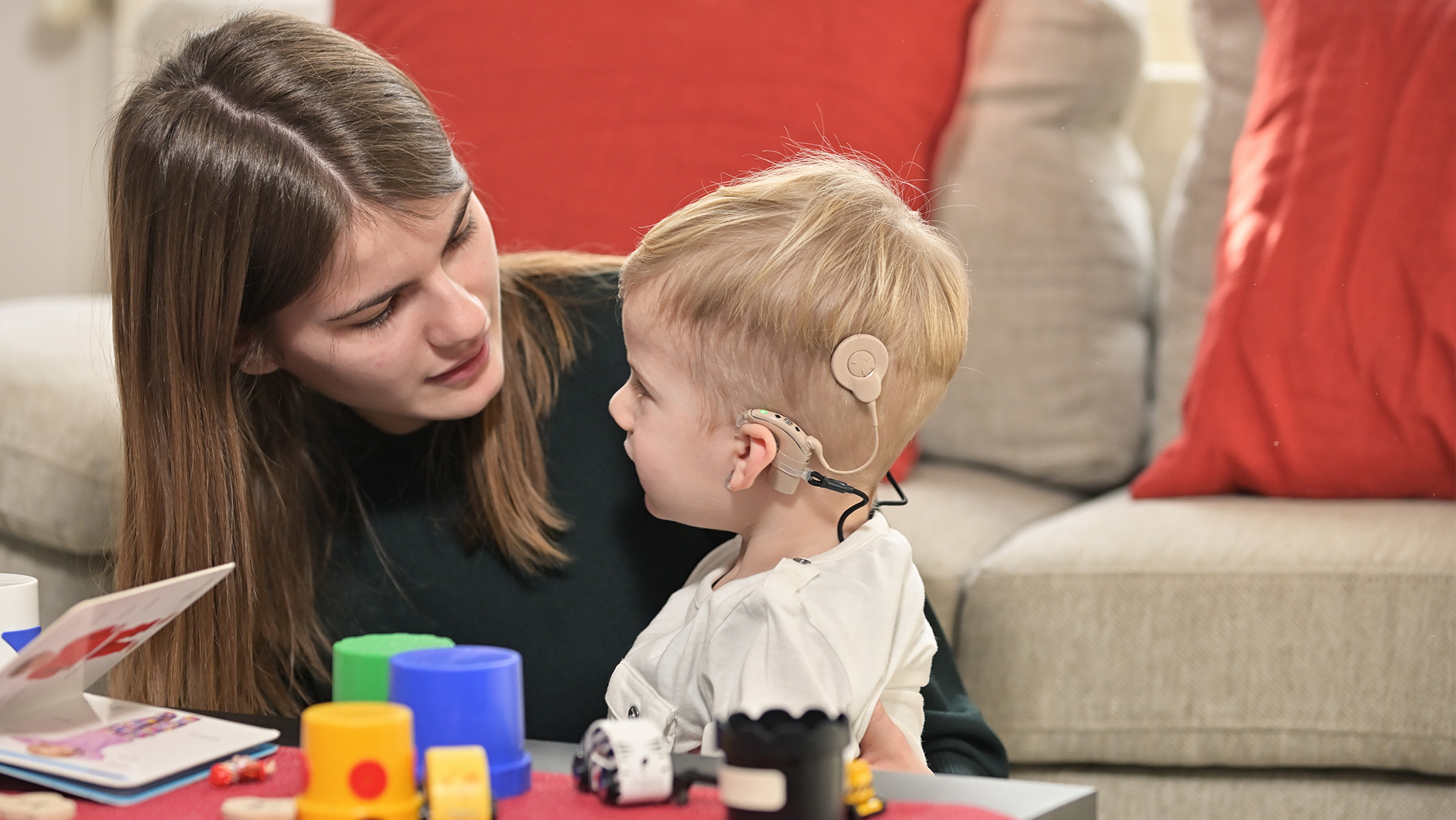
The device consists of an external sound processor that encodes sound. It sends signals to electrodes in the inner ear that stimulate the hearing nerve with small pulses of electrical current. Nerve fibres convey this information to brain, where it is interpreted.
The development
The first bionic ear (multi-channel cochlear implant) prototype was successfully implanted in a patient at The Royal Victorian Eye and Ear Hospital in 1978. The patient, who had total hearing loss, was happy to hear again after two years of complete silence. Clark was overcome. “I went quietly into the next-door lab and burst into tears of joy,” he said.
Clark and his multidisciplinary team partnered with Nucleus Ltd to commercialise the device, beginning clinical trials in 1982. In 1985, the implant was approved for use in adults by the US FDA, and the company Cochlear Ltd was founded. In 1990, the device was approved for use in children – the first implant of any type to be approved by a world health regulatory body.
Over time, cochlear implants have become smaller, lighter and more effective and reliable. As of 2022, one million devices have been placed worldwide. They have markedly improved quality of life for people with hearing loss. With restored hearing, children born profoundly deaf attain speech and language outcomes that put them on par with their hearing peers.
“Seeing children hearing makes it all worthwhile,” Clark said. “I still feel thrilled and very emotional. It still makes me almost want to cry like I did when I knew that we had succeeded.”
Is the next breakthrough at risk?
Breakthroughs like this don’t happen overnight. They are the result of years or decades of discovery research supported by sustained investment.
Australia has fallen significantly behind the OECD average on investment in research and development. Without sustained investment, discoveries like this one will never make it out of the lab.
Send a message now and tell decision-makers: restore Australian science funding.
Sources
- Australian Academy of Science. Professor Graeme Clark. https://www.science.org.au/profile/graeme-clark
- Cochlear Ltd. Proven over time: the cochlear implant story. https://www.cochlear.com/au/en/about-us/proven-over-time
- Australian Academy of Science. Conversations with Australian Scientists: Professor Graeme Clark. https://science.org.au/our-focus/history-australian-science/conversations-australian-scientists/professor-graeme-clark-otolaryngologist
- The Royal Victorian Eye and Ear Hospital. Cochlear implant history. https://eyeandear.org.au/patients-visitors/essential-patient-and-visitor-information/coming-for-a-specialist-appointment/specialist-clinics/cochlear-implant/history/
- NHMRC. The cochlear implant restores hearing: Case study. https://www.nhmrc.gov.au/about-us/resources/impact-case-studies/cochlear-implant-restores-hearing
- Galvin, D. ‘It’s still the same for me as it was years ago’. Pursuit. University of Melbourne. https://pursuit.unimelb.edu.au/articles/its-still-the-same-for-me-as-it-was-years-ago
- Montgomery, R. & Mankekar, G. (2024). From silence to sound: Graeme Clark’s cochlear implant. Cureus, 16(9):e68580. https://doi.org/10.7759/cureus.68580
- Bionics Institute. Laureate Professor Graeme Clark AC: Pioneer of the bionic ear. https://www.bionicsinstitute.org/about/professor-graeme-clark-ac/
- Feature image credit: Nick Fewings on Unsplash