When a solar breakthrough became a broken record
Australian research led by Professor Martin Green created the solar cell used in panels worldwide.
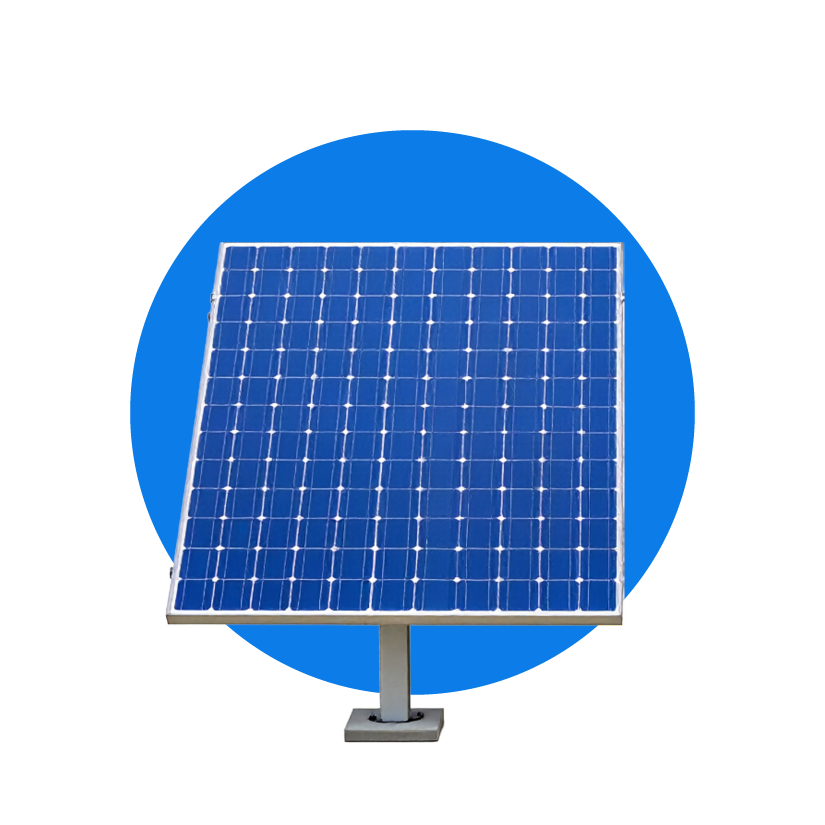
Behind almost every solar panel worldwide sits a bright spark from an Australian invention.
The research
In the 1980s, a lab at the University of New South Wales (UNSW) made solar power breakthroughs that would change the world. Solar cells – the units that make up a solar panel – work by converting light into electrical energy. The first commercial silicon solar cell was developed in 1954 and could convert just 6% of incoming sun rays into electricity, with the rest lost as heat. Researchers began incrementally ramping up the efficiency but believed they would hit a wall at 20%.
That is, until Professor Martin Green and his team of solar pioneers at UNSW – including Professor Andrew Blakers, Professor Stuart Wenham, Dr Aihua Wang and Dr Jianhua Zhao – predicted that efficiency could reach about 25% in practice. In 1983, they developed a solar cell with a record 18% efficiency – and they kept pushing higher. The UNSW lab held the world record for most efficient solar cell for 30 of the 40 years between 1983 and 2023.
“Over 31 years, we improved the performance of cells by 50% in relative terms – but it took about 18 steps,” Professor Green explained.
Among the first concepts developed at the lab was the TOPCon solar cell, which enabled more conversion of sunlight into usable electricity.
A second innovative approach came with the PERC cell, first demonstrated by the team in 1989. In this design, an extra layer is added to the rear of the solar cell that reflects unabsorbed light back to the cell for a second absorption attempt, thereby increasing efficiency.
The development
The UNSW lab opted to publish rather than patent the PERC design in 1989, opening up the technology for wide adoption. It took two decades of further research and development for PERC solar cells to reach market. A pivotal moment came in 1999, when Wang and Zhao achieved a world-record 24.7% efficiency with the PERC design – showing that its approach was viable. Australian designs were eventually picked up by manufacturers and integrated into large‑scale production from 2013.
The TOPCon approach took longer to translate into a commercially viable product, but now dominates cell production worldwide.
Today, the PERC and TOPCon solar cell architecture pioneered through the UNSW research underpins panels used worldwide, together making up about 90% of the global solar cell market. Many of the efficiency improvements developed at UNSW are now standard features in commercial solar cells, contributing to the recent exponential growth in low-cost solar.
Since 2020, solar power has been the cheapest source of new electricity generation. The PERC solar cell is mitigating about 2–3% of global greenhouse gas emissions by displacing coal, Professor Blakers says. Australian research is driving the transition to renewables – a transformative contribution to global climate action.

Is the next breakthrough at risk?
Breakthroughs like this don’t happen overnight. They are the result of years or decades of discovery research supported by sustained investment.
Australia now invests significantly less in research and development than the OECD average. Without proper funding, discoveries like this one will never make it out of the lab.
Send a message now and tell decision-makers: restore investment in Australian science.
Sources
UNSW Engineering. How an efficiency leap unlocked a trillion‑dollar industry. UNSW. https://www.unsw.edu.au/engineering/research-technology/is/how-efficiency-leap-unlocked-1-trillion-industry
Professor Andrew Blakers. Australian National University. https://iceds.anu.edu.au/people/all-people/professor-andrew-blakers
Feature image solar cells Raysonho via Wikimedia Commons